Key takeaways
- The best wildflower honey UK has to offer is raw, unheated, and traceable to a named beekeeper and apiary.
- Flavour and colour vary by region and season because bees forage on whatever is blooming nearby, from hedgerow blossom to clover and bramble.
- Avoid blended or imported honey if you want genuine provenance; look for single-apiary batches instead.
- Buying directly from independent British beekeepers supports pollinators, small-scale farming, and honeybee welfare.
- Local Honey's beekeepers platform makes it easy to buy wildflower, blossom, and heather honey straight from the people who keep the bees.
The best wildflower honey in the UK is raw, unheated, and produced by a single beekeeper from hives set among a genuine mix of native flora, not blended from multiple countries or filtered to uniformity. Look for honey that names the beekeeper, the region, and the season it was harvested; that traceability, along with a naturally varied colour and a slightly grainy or crystallised texture over time, is the clearest sign of quality.
What makes wildflower honey different from other British honeys
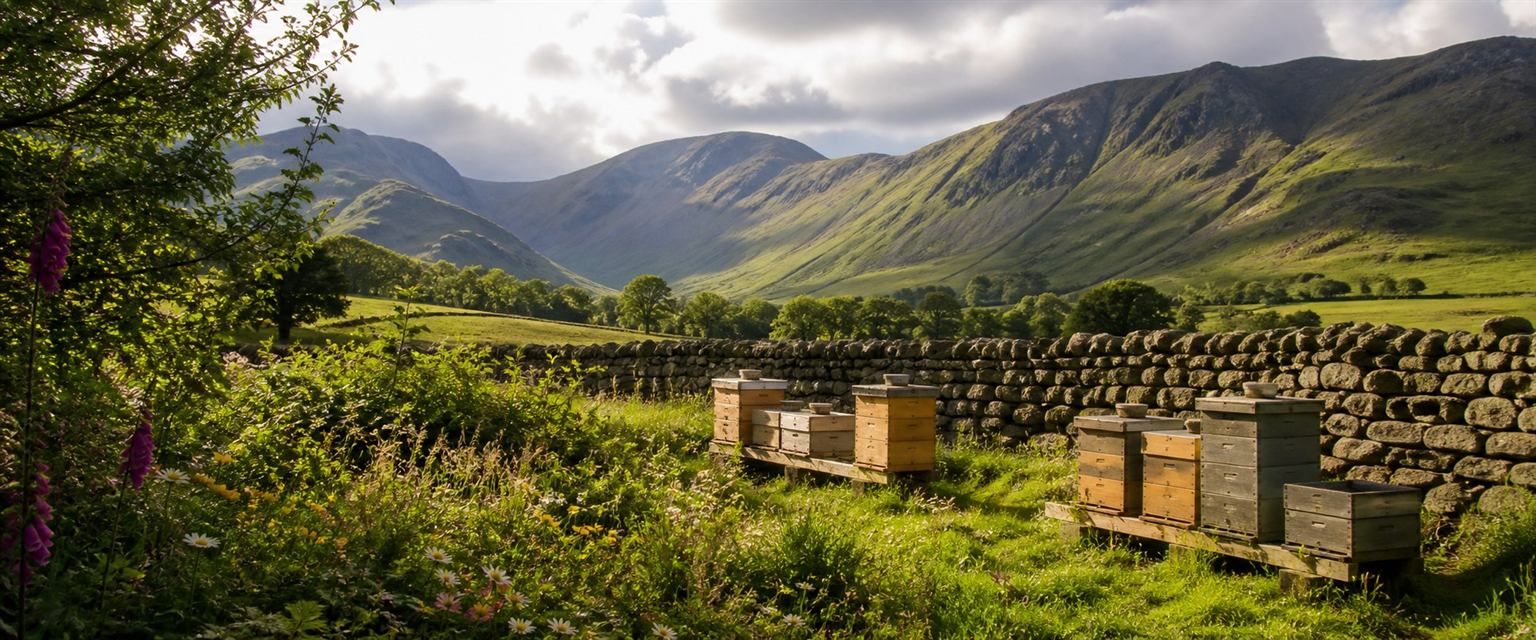
Wildflower honey is the most varied and, in many ways, the most honest expression of the British countryside. Unlike single-flower honeys such as heather or oilseed rape, wildflower honey comes from bees foraging on whatever is in bloom within a few miles of the hive: hawthorn, bramble, clover, dandelion, willowherb, and dozens of hedgerow and wildflower species depending on the time of year and where the apiary sits.
This means no two batches are ever quite the same. A jar from a Cornish hedgerow apiary in early summer might taste light, floral, and faintly citrusy, while a jar from a Yorkshire meadow later in the season could be darker, richer, and more treacly. That variation is not a flaw. It is the honest fingerprint of a particular place and moment, and it is exactly what you lose when honey is blended at scale.
How to spot genuinely raw, artisan wildflower honey
Artisan wildflower honey is typically:
- Raw and unheated, meaning it has never been pasteurised, which preserves natural enzymes, pollen, and subtle aromatics that heat treatment destroys.
- Minimally filtered, so tiny particles of pollen and wax remain, which is part of why raw honey often crystallises faster than processed honey.
- Traceable to one beekeeper and apiary, rather than a generic blend of "honey from EU and non-EU countries", the label required on mass-market blended honey sold in the UK.
- Seasonal, harvested at a specific point in the year rather than produced continuously to meet supermarket volume demands.
If a label cannot tell you which beekeeper produced it, or simply says "pure honey" without any regional detail, it is worth being cautious. Genuine British beekeeper wildflower honey will usually carry the keeper's name, their location, and often the hive or apiary reference.
Why provenance matters more than a fancy label
The UK honey market has a well-documented problem with adulteration and mislabelling. Independent testing commissioned by the European Commission and reported by consumer bodies has repeatedly found that a significant proportion of honey sold as "pure" in supermarkets shows signs of dilution with cheap syrups, particularly among imported blends sourced from multiple countries. This is one of the strongest reasons to buy directly from a named beekeeper rather than relying on packaging claims alone.
When you buy from a small-scale British producer, you are buying a product that has gone from hive to jar with minimal intervention, usually within weeks of extraction, and often from apiaries the beekeeper can describe in detail, right down to the hedgerows and wildflower meadows their bees visit.
Regional flavour: what shapes the taste of British wildflower honey
Britain's varied landscape means wildflower honey genuinely tastes different depending on where it is made:
- South West England: often lighter and floral, shaped by hedgerow blossom, bramble, and coastal wildflowers.
- South East and East Anglia: can carry notes of clover and field bean alongside wild hedgerow forage.
- Wales and the Welsh Marches: frequently richer, with bramble and heather-adjacent influences in upland areas.
- Scotland and the North: darker, more robust honeys shaped by rougher terrain, gorse, and later-flowering plants.
Beekeepers who work with the seasons will often produce a spring wildflower honey and a distinctly different late-summer batch from the same hives, simply because the surrounding forage has changed. This is part of the pleasure of buying artisan wildflower honey: you are tasting a specific season in a specific place, not a standardised product engineered to taste the same every time.
How to buy wildflower honey online without losing that authenticity
Buying wildflower honey online can absolutely preserve that sense of place and provenance, provided you buy from the right source. Look for platforms and sellers that:
- Name the individual beekeeper and their location
- State the harvest season or year
- Describe the honey as raw and unheated
- Offer single-apiary batches rather than blends
- Are transparent about how the honey was extracted and jarred
This is precisely the model Local Honey works with. Rather than pooling honey from multiple sources into a single blended product, the Local Honey beekeepers platform connects customers directly with independent British beekeepers selling raw wildflower honey, blossom honey, and heather honey from their own hives. Each jar can be traced back to a real person and a real patch of British countryside.
If you have never tried honey this way before, it is worth comparing two or three different wildflower batches from different regions side by side. The differences in colour, aroma, and finish are often startling once you have only ever known the flavour of blended, supermarket honey.
Beyond wildflower: exploring blossom and heather honey
Once you have found a wildflower honey you love, it is worth exploring other single-source British honeys to understand how much variety exists. Blossom honey, often produced earlier in the season from fruit trees and hedgerow blossom, tends to be lighter and more delicately sweet. Heather honey, by contrast, is thicker, almost jelly-like in texture, with a distinctive, slightly smoky depth that reflects the moorland its bees forage on.
Tasting your way through wildflower, blossom, and heather honey from different beekeepers is one of the best ways to appreciate just how much skill, patience, and local knowledge goes into every jar of genuinely raw British honey.
Supporting British beekeepers when you buy
Choosing artisan wildflower honey over blended or imported alternatives has a knock-on benefit beyond flavour. Independent beekeepers play a meaningful role in supporting local pollinator populations, and buying directly from them helps sustain small-scale beekeeping at a time when honeybee health faces real pressure from disease, habitat loss, and changing weather patterns, as outlined by the British Beekeepers Association. Every jar bought from a named keeper is a small, direct contribution to that work.
Ready to taste the difference for yourself? Find raw honey from a beekeeper near you and discover a wildflower honey shaped by your own region's countryside.
Making the switch from supermarket honey
If you currently buy blended supermarket honey out of habit, switching to a single-apiary wildflower honey is a small change with a noticeable payoff: richer flavour, better traceability, and the satisfaction of knowing exactly whose hives your honey came from. It costs a little more than a mass-produced blend, but you are paying for genuine skill, seasonal patience, and a product that has not been processed to erase its origins.
For anyone serious about finding the best wildflower honey the UK has to offer, the answer is rarely found on a supermarket shelf. It is found by seeking out the beekeepers themselves.
Find raw honey from a beekeeper near you
Written with the help of AI for Local Honey, championing pure, raw honey from independent British beekeepers.
This article is for general information and is not medical advice.
Frequently asked questions
What does "raw" mean on a jar of wildflower honey?
Raw means the honey has not been heated or pasteurised after extraction. This preserves natural enzymes, pollen, and aroma compounds that heat processing destroys, and it is why raw honey often crystallises naturally over time rather than staying perfectly liquid.
Why does wildflower honey taste different from batch to batch?
Because bees forage on whatever wildflowers, hedgerow blossom, and hedgerow plants are flowering nearby at the time, the flavour, colour, and texture of wildflower honey changes with the season and the region. This natural variation is a sign of authenticity rather than inconsistency.
Is it worth buying wildflower honey online rather than in a supermarket?
Yes, provided you buy from a platform or seller that names the individual beekeeper and apiary. Supermarket honey is often blended from multiple countries, whereas honey bought directly from a British beekeeper is typically single-source, raw, and traceable to a specific place and season.
How can I tell if wildflower honey has been diluted or adulterated?
Genuine raw honey should list a specific beekeeper or apiary rather than a vague blend statement, and it should eventually crystallise naturally in storage. If a honey stays perfectly clear and syrupy indefinitely and gives no indication of its origin, it is worth questioning its purity.
Ready to taste the real thing?
Find raw, unheated honey from an independent beekeeper near you.
Find a beekeeper